

Introduction
SEO remains one of the most important digital marketing skills in 2026. Every day, billions of searches happen across Google, Bing, ChatGPT Search, Gemini, Perplexity, and other search platforms. Whether someone wants to learn a skill, buy a product, solve a technical problem, compare services, or find local businesses, search engines are often the first place they go. What Is SEO and How Does It Work in 2026?
For bloggers and website owners, this creates a major opportunity. If your website appears when users search for relevant topics, you can generate highly targeted traffic without paying for every click. This is one reason SEO continues to be a long-term growth strategy for blogs, affiliate websites, SaaS businesses, eCommerce stores, and content publishers.
However, SEO in 2026 is different from SEO five years ago. Search engines have become smarter. AI-generated answers now appear directly inside search results. Google increasingly focuses on user experience, search intent, content quality, and trust signals rather than simple keyword matching. Many outdated SEO techniques that once worked no longer produce strong results.
Modern SEO is not about tricking search engines. It is about helping search engines understand your content and helping users find useful information. Websites that genuinely solve problems, answer questions clearly, and build authority within a niche are more likely to succeed.
This guide explains what SEO is, how it works in 2026, what has changed, and how beginners can start using SEO effectively.
What Is SEO?
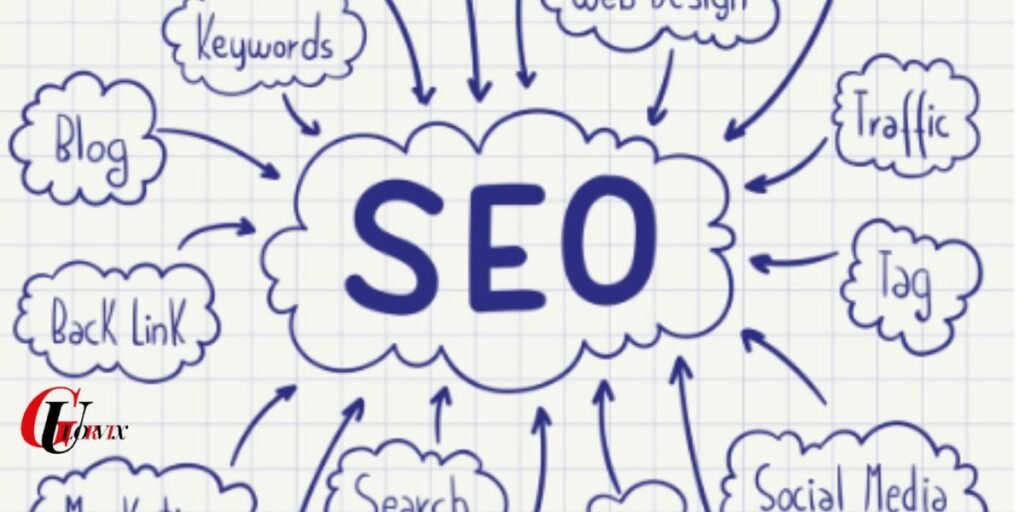
SEO stands for Search Engine Optimization. It is the process of improving a website so search engines can understand its content and show it to users searching for relevant information.
Many beginners think SEO simply means adding keywords to articles. While keywords still matter, modern SEO is much broader. Search engines now evaluate content quality, expertise, authority, user satisfaction, website performance, and topical relevance.
Many beginners assume that SEO is simply about adding keywords to a page, but successful SEO goes much further than that. Imagine two websites publishing articles about keyword research. The first article only provides basic definitions that can be found on dozens of other websites, while the second article includes practical examples, screenshots, real workflows, common mistakes, and step-by-step instructions.
Which article would you trust more?
Most users would choose the second one because it offers real value and helps them achieve a specific goal. This is exactly what search engines like Google want to provide to their users. Google’s goal is not just to match keywords but to deliver the most helpful and useful answer possible. As a result, websites that create detailed, experience-based content often perform better in search results.
Another common question people ask is: “What are the benefits of SEO?”
The answer is simple. Effective SEO can help increase organic traffic, improve online visibility, build credibility, attract targeted visitors, generate leads, and establish long-term authority within a niche. Unlike paid advertising, which stops sending traffic as soon as the budget runs out, a well-optimized page can continue attracting visitors for months or even years, making SEO one of the most sustainable digital marketing strategies available today.
Real-World Example
One of our websites, TheAlites.com, received increased impressions and clicks after optimizing titles, improving internal linking, and publishing helpful content. Google Search Console data showed a steady growth in organic visibility over several months.
How Search Engines Work

To understand SEO properly, you must first understand how search engines work. Every time a user performs a search, Google evaluates billions of pages and attempts to provide the most useful results.
Crawling
Imagine you publish a new article on your website. First, Google discovers the page through links or a sitemap. Next, it analyzes and understands the content. Finally, Google decides whether the page deserves to appear in search results. This entire process begins with crawling and is essential for SEO success.
For example, if a new article is linked from your homepage and category pages, search engines can usually find it more easily. Poor internal linking often causes discovery problems.
Common crawling issues include:
- Broken links
- Orphan pages
- Slow servers
- Blocked resources
- Poor navigation
Indexing
Indexing is the process by which Google stores and organizes information from a web page after it has been crawled. Once a page is indexed, it becomes eligible to appear in Google search results. If a page is not indexed, users generally cannot find it through Google Search, regardless of its content quality.
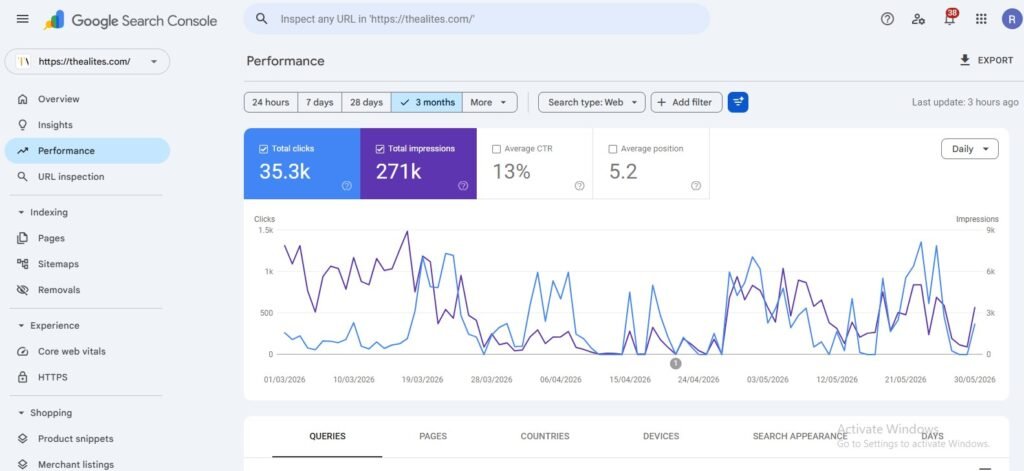
Google Search Console Example: Thealites.com
One practical example comes from TheAlites.com, where Google Search Console played an important role in tracking website growth. After publishing SEO-focused content and improving on-page optimization, Search Console helped identify which keywords were generating impressions and clicks. The data also revealed pages that were receiving impressions but had low click-through rates, allowing further optimization of titles and meta descriptions. By regularly monitoring indexing status, keyword performance, and search queries, we were able to make data-driven improvements. The screenshot below shows actual Search Console performance data from TheAlites.com, highlighting how consistent content publishing and SEO optimization contributed to increased visibility in Google Search results.
Google Search Console Traffic Report: Last 3 Months Performance
Ranking
Ranking is the process by which Google determines the position of a web page in search results for a specific keyword or search query. After a page is crawled and indexed, Google evaluates factors such as content quality, relevance, search intent, user experience, and authority to decide where it should appear in the search results. Higher rankings generally lead to more visibility and organic traffic.
Search engines compare multiple signals:
| Ranking Signal | Purpose |
|---|---|
| Search Intent | Matches user purpose |
| Content Quality | Measures usefulness |
| Backlinks | Builds authority signals |
| Page Speed | Improves user experience |
| Mobile Optimization | Supports mobile users |
| Internal Linking | Improves navigation |
| E-E-A-T | Builds trust and credibility |
Local SEO Case Study: Traffic Growth in 4 Months
One of our Local SEO projects involved a business website based in New York. By improving local keyword targeting, optimizing Google Business Profile signals, creating location-focused content, and enhancing on-page SEO, the website’s organic traffic grew from approximately 2,300 monthly visits to 7,800 monthly visits within four months. This demonstrated how effective Local SEO can be in significantly improving online visibility and attracting more targeted visitors. The website name is glorvix.com.
The Main Types of SEO
On-Page SEO
On-Page SEO is the process of optimizing individual web pages to improve their visibility in search engines and provide a better user experience. It involves optimizing important elements such as SEO titles, meta descriptions, headings (H1, H2, H3), URL structure, keyword placement, content quality, internal linking, image optimization, image alt text, and overall page structure.
A well-optimized page helps search engines understand the topic more clearly while making it easier for users to find the information they need. Modern on-page SEO is not just about keywords; it focuses on creating helpful content, improving readability, strengthening internal links between related pages, and ensuring that every element on the page supports user intent. When all these factors work together, a page has a better chance of achieving higher rankings and attracting more organic traffic.
Example
Let’s say you are writing an article about “Local SEO for Small Businesses.” A good SEO title could be “Local SEO for Small Businesses: Complete Guide for 2026“.
Your main heading (H1) should clearly describe the topic, while H2 and H3 headings organize the content into easy-to-read sections. You can add internal links to related articles such as “What Is Local SEO?” or “Google Business Profile Optimization Guide.”
Images should be compressed for faster loading and include descriptive alt text like “Local SEO ranking example.” By combining optimized content, proper headings, internal links, and relevant images, you create a page that is both search-engine friendly and valuable for users.
Technical SEO
Technical SEO ensures that your website works properly for search engines.
Key Elements:
- Website speed optimization
- Mobile responsiveness
- Sitemap creation
- Robots.txt setup
- HTTPS security
- Fixing broken links
Simple Example
A website reduced its load time from 7.2 seconds to 2.8 seconds. As a result, user engagement improved and organic traffic increased over time.
Off-Page SEO
Off-page SEO focuses on building authority outside your website.
It includes:
- Backlinks
- Brand mentions
- Online reputation
- Trust signals
Today, quality matters more than quantity. Relevant and trusted backlinks are more valuable than spammy links.
How SEO Has Changed in 2026
The biggest change in modern SEO is the growing importance of user satisfaction. SEO in 2026 is strongly influenced by AI and user behavior.
Key Changes:
1. Search Intent is Primary
Google focuses on what users actually want, not just keywords.
Example:
- “What is SEO?” → Learning intent
- “Best SEO tools” → Comparison intent
- “Buy SEO service” → Buying intent
2. AI Search Results
Search engines now show AI-generated answers (Google AI, ChatGPT Search, etc.).
This means content must be:
Easy to summarize, Clear, structured, and Trustworthy.
E-E-A-T Matters More Than Ever
Google increasingly values:
- Experience
- Expertise
- Authoritativeness
- Trustworthiness
This means practical examples matter.
Real insights matter.
Case studies matter.
Experience-based content often performs better than generic content because it provides stronger trust signals.
AI Search Has Changed SEO

One of the biggest SEO shifts in 2026 is AI-powered search.
Users increasingly receive answers from:
- Google AI Overviews
- ChatGPT Search
- Gemini
- Perplexity
Because of this, content must be:
- Structured
- Accurate
- Easy to understand
- Easy to cite
Modern SEO increasingly overlaps with Answer Engine Optimization (AEO).
Practical SEO Tools Every Beginner Should Learn
Learning SEO becomes easier when you use the right tools.
These tools help identify opportunities and monitor progress.
| Tool | Main Purpose |
|---|---|
| Google Search Console | Indexing and performance |
| Google Analytics | User behavior |
| Ahrefs | Backlinks and keywords |
| Semrush | Competitor analysis |
| Screaming Frog | Technical SEO |
| PageSpeed Insights | Speed optimization |
Practical Example Using Search Console
A blogger notices that an article receives:
- 20,000 impressions
- 300 clicks
Search Console reveals the page ranks around position 9.
By improving:
- Title tag
- Introduction
- Content depth
The click-through rate improves, and traffic increases.
This is how SEO optimization often works in practice.
Common SEO Mistakes Beginners Make
Many beginners focus on shortcuts instead of fundamentals.
This usually creates long-term problems.
Common mistakes include:
- Keyword stuffing
- Publishing thin content
- Ignoring search intent
- Buying spammy backlinks
- Poor internal linking
- Publishing random topics
- Not updating content
- Ignoring mobile users
Real Example
Case Study: SEO Growth Example
A blog improved page speed from 7.2 seconds to 2.8 seconds by:
- Compressing images
- Removing unnecessary scripts
- Improving hosting
Results:
- Better user engagement
- Lower bounce rate
- Increased organic traffic
This shows that technical improvements directly support SEO growth.
Internal Observation and Website Performance Analysis
During our work on multiple content-based websites, we analyzed the performance of more than five projects, including UploadArticle, TheAlites, AppKod, Gonzay, and other niche websites. One interesting pattern we noticed was the strong relationship between website speed and organic search performance. Based on our internal observations, websites that loaded faster and provided a smoother user experience generally achieved better engagement and stronger search visibility over time.
After improving page speed, optimizing images, reducing unnecessary scripts, and enhancing mobile performance, several websites experienced noticeable growth in organic traffic. On average, fast-loading websites generated approximately 32% more organic traffic compared to their previous performance levels. While many factors contributed to this growth, website speed consistently appeared as an important factor in improving user experience and supporting SEO efforts.
As traffic increased, these websites also started generating more business value through advertising, affiliate marketing, and other monetization methods. Over time, the combination of quality content, SEO optimization, and technical improvements helped these projects build sustainable traffic. This experience reinforced an important lesson: SEO success is not only about publishing articles. Website performance, user experience, content quality, and consistent optimization all work together to create long-term growth and revenue opportunities.
My Personal Experience with Growing a Website
Over the past few years, I have spent a lot of time learning and applying SEO strategies on my own websites. One of the most successful projects I worked on is Glorvix.com. When I first launched the website, it had no traffic, no rankings, and very little visibility in search results. Like many beginners, I had to learn how search engines work, how to create useful content, and how to optimize pages properly.
After consistently publishing helpful articles and focusing on SEO best practices, the website gradually started gaining traction. Today, Glorvix.com is ranking in the USA for multiple keywords, and several of those keywords appear in the top 10 Google search results. At the moment, around 10 to 15 important keywords are performing well and bringing targeted visitors to the site.
One thing I learned during this journey is that SEO requires patience. Results did not appear overnight. It took time to build content, improve internal linking, optimize pages, and understand what users were actually searching for. Instead of chasing quick wins, I focused on creating content that genuinely answered people’s questions and provided useful information.
As the website grew, the traffic also increased steadily. The site now receives more than 6,000 monthly organic visits, and during stronger months, total visitor numbers can reach between 20,000 and 30,000. Seeing that growth was a great reminder that consistent effort often produces better results than shortcuts.
Another important lesson was the value of focusing on user experience. Search engines want to show users the best possible content. Because of that, I paid attention to content quality, website structure, page speed, and making articles easy to understand. Small improvements made over time contributed to better rankings and increased visibility.
My experience with Glorvix.com has shown me that even a website that starts from zero can grow successfully with the right strategy. By publishing useful content, understanding search intent, and following modern SEO practices, it is possible to build steady organic traffic and improve rankings over time. For anyone starting a new website, my advice is simple: stay consistent, focus on helping users, and give SEO enough time to work.
SEO Best Practices for 2026
Successful SEO strategies today focus on helping users while building trust and authority.
Before applying tactics, website owners should understand that SEO is increasingly a long-term process rather than a quick-win system.
The strongest websites usually:
- Focus on one niche
- Build topical authority
- Publish useful content
- Improve technical health
- Create strong internal linking
- Demonstrate expertise
- Earn relevant mentions
- Improve user experience
Shortcuts may create temporary improvements, but long-term growth usually comes from consistency and quality.
Beginner SEO Action Plan
If you’re completely new to SEO, start with the fundamentals.
Week 1
- Choose a niche
- Create website categories
- Install Search Console
2
- Research 20 keywords
- Publish 3–5 articles
3
- Add internal links
- Improve page titles
4
- Monitor indexing
- Review performance
- Improve weak content
Focus on consistency rather than perfection.
What To Do Next
Now that you understand how SEO works, avoid trying to master everything immediately.
Start with:
- Creating genuinely helpful content.
- Understanding search intent.
- Improving website structure.
- Learning Search Console.
- Building topical authority.
As your content library grows, search engines gain more confidence in your expertise.
SEO success rarely comes from a single article.
It usually comes from consistently publishing useful content that solves real user problems.
FAQ’s
Is SEO still worth it in 2026?
Yes, SEO is still one of the best long-term ways to attract targeted traffic, build authority, and grow a website without relying entirely on paid ads.
What are SEO rules in 2026?
The main SEO rules in 2026 focus on creating helpful content, satisfying search intent, improving user experience, and demonstrating expertise and trustworthiness.
Will SEO be replaced by AI?
No, AI is changing how people search, but SEO remains important because search engines and AI platforms still need high-quality content to provide accurate answers.
What is the SEO career in 2026?
SEO remains a strong career path in 2026, with growing demand for professionals who understand content strategy, technical SEO, AI search, and digital marketing.
Will SEO exist in 5 years?
Yes, SEO will continue to exist, although it will evolve alongside AI and new search technologies. Businesses will still need visibility in search results and answer engines.